

A pool should not require a trip to the equipment pad every time the temperature changes, the kids want the spa on, or guests arrive after sunset. Smart pool automation systems put the most-used controls in one place, giving Southern California homeowners a practical way to manage an elegant backyard with less guesswork and less daily effort.
For a custom pool, automation is not just a convenient add-on. It is part of a well-planned equipment design that protects the investment, supports efficient operation, and makes the entire outdoor space easier to enjoy. The right system can coordinate the pump, heater, lights, spa, water features, and cleaning schedules while still leaving the homeowner in control.
What smart pool automation systems actually control
At its core, pool automation connects compatible equipment to a central controller. From a wall-mounted panel, remote, or mobile app, you can operate individual functions or activate pre-set settings called scenes. A single command can prepare the pool for an evening swim, warm the spa, turn on landscape lighting, and start a waterfall.
The exact capabilities depend on the equipment selected and how the pool is designed. A basic setup may schedule a variable-speed pump and control pool lighting. A more complete system can manage a pool and integrated spa, salt chlorine generation, heater settings, water features, valves, and selected outdoor lighting.
That difference matters during planning. A pool with a Baja shelf, spillover spa, sheer descents, fire features, and multiple lighting zones needs more than an afterthought controller. It needs equipment and plumbing laid out to support those features cleanly from the start.
The everyday controls homeowners use most
Most homeowners get the greatest value from a few consistent functions: pump schedules, temperature adjustments, spa mode, lighting, and water-feature control. Rather than manually changing valves or walking outside to turn equipment on, these settings are available from a single interface.
For example, a family can schedule filtration during preferred utility-rate windows, program lights to come on before dinner, and activate spa heat before leaving work. When the system is correctly configured, the backyard feels ready when you are ready to use it.
Why automation belongs in a luxury pool build
A luxury backyard is meant to extend daily life beyond the walls of the home. It should work for a quiet morning, a busy family afternoon, and a weekend gathering without becoming another maintenance project. Automation helps make that possible, but its value goes beyond convenience.
A professionally designed system provides more consistent equipment operation. Pumps can run on reliable schedules. A salt system can operate in coordination with filtration. Heating can be managed intentionally instead of running longer than necessary. These details can reduce wasted operating time, although actual energy use depends on pool size, equipment selection, climate, desired water temperature, and homeowner habits.
Automation also improves visibility. Many systems can provide alerts for certain equipment conditions, allowing homeowners to address an issue before it becomes a bigger interruption. It does not replace regular pool service or professional inspections, but it gives you a clearer view of what your equipment is doing.
For property owners thinking about resale value, a polished and functional equipment package also supports the overall impression of the home. Buyers notice when a pool, spa, hardscape, lighting, and outdoor living area feel thoughtfully integrated rather than assembled in separate phases.
Plan automation before construction, not after
It is possible to add controls to an existing pool, but the most efficient time to plan automation is during the design-build process. At that stage, the contractor can coordinate electrical requirements, plumbing lines, valve actuators, equipment-pad space, lighting zones, and future expansion needs.
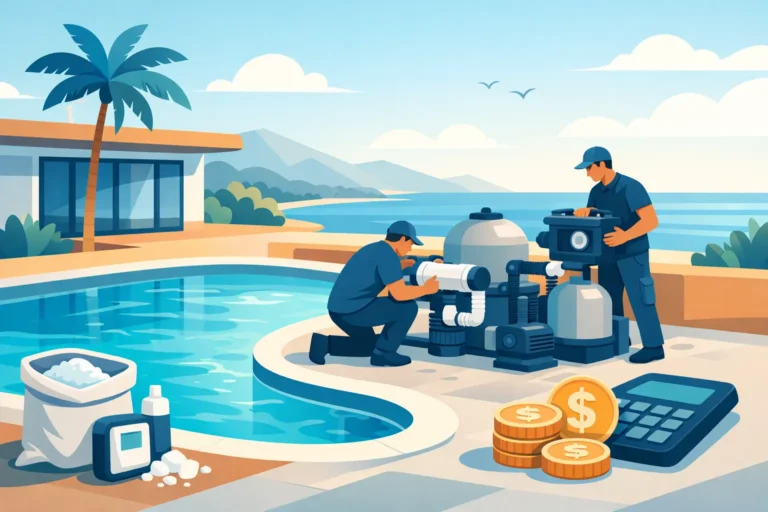
A clean equipment pad is especially important. Premium equipment performs best when it is installed with accessible plumbing, clear labeling, sufficient working space, and a layout that allows service without disturbing the rest of the system. This is contractor accountability in a place homeowners may not see every day but will rely on for years.
At High Level Services, integrated smart equipment is considered alongside the structural and visual elements of a custom pool. That means automation can be designed around the way the homeowner intends to use the space, whether the priority is a fast-heating spa, dramatic evening lighting, quiet variable-speed circulation, or entertaining features that activate together.
Ask for the right zones and scenes
Before selecting controls, think through real routines instead of focusing only on features. Do you want the pool lights separate from patio and landscape lighting? Should the waterfall run independently from the main circulation schedule? Will the spa be used several nights each week? Do you want a simple “entertain” setting that turns on selected lights and water features without heating the spa?
These choices shape the number of relays, valve actuators, and circuits required. Planning them early is more reliable and more cost-effective than discovering later that a desired feature cannot be independently controlled.
It is also wise to leave room for reasonable future upgrades. Outdoor kitchens, added landscape lighting, or a new feature can sometimes be incorporated later when the electrical planning accounts for expansion. That does not mean paying for every possible option now. It means building with foresight.
Equipment choices still matter
Smart controls cannot compensate for undersized, poorly installed, or mismatched equipment. The controller is the command center, but the quality of the pump, heater, sanitization equipment, plumbing, and electrical work determines how well the system performs.
For many Southern California pool owners, a variable-speed pump is a strong foundation because it can run at different speeds for filtration, heating, water features, and cleaning. When programmed properly, it can support quieter operation and better efficiency than equipment that runs at one fixed speed. Salt systems are another popular choice for homeowners who prefer a more consistent sanitization approach, though water chemistry still needs regular testing and balancing.
Heater selection deserves equal attention. If an integrated spa is a central part of the project, fast and dependable heating may be more valuable than a basic setup. If the pool is used mainly in warmer months, the priorities may be different. The best recommendation depends on the size of the pool, spa volume, exposure to sun and wind, and how often each body of water will be used.
Common mistakes to avoid
The most expensive automation decision is often choosing a system based only on the app. An attractive screen does not guarantee the system has enough capacity, compatible equipment, or reliable installation behind it. Homeowners should evaluate the complete package, including the controller, wiring, valves, pump, heater, sanitizer, and the contractor responsible for commissioning it.
Another common mistake is overcomplicating controls. More scenes are not always better. A system should be simple enough that every member of the household can use it confidently. The best setup typically includes a handful of clearly named settings, sensible schedules, and manual control where it is useful.
Finally, do not treat automation as a substitute for durable construction. Long-term performance starts with the pool shell, engineering, plumbing, electrical work, and premium materials. In a high-quality build, smart controls complement structural integrity rather than distract from it.
A better way to enjoy the backyard
A well-built pool is already a major lifestyle investment. Smart automation gives that investment a more responsive, polished feel by removing routine friction from the moments that matter. The spa can be warm before you get home, the lights can set the mood before guests arrive, and the equipment can follow a consistent plan even during a busy week.
When considering a new pool or a substantial backyard renovation, ask how the equipment will work together from day one. A clear automation plan creates a more comfortable personal oasis now and a more durable, intentional outdoor environment for the years ahead.



Pingback: Saltwater Pool Installation Cost in Southern California - High Level Services