A waterfall can turn a well-built pool into the focal point of the entire backyard. It adds movement, sound, and a resort-style finish that makes a pool feel more private and intentional. But pool waterfall installation cost is not one fixed number. The right budget depends on whether the feature is built into a new pool, added to an existing pool, designed as a simple spillway, or engineered as a large natural-stone feature.
For Southern California homeowners, the best approach is to look beyond the visible water. A durable waterfall requires structural planning, reliable plumbing, correct waterproofing, and materials chosen for years of sun, water chemistry, and everyday use. When those details are handled correctly, the result is an elegant feature that improves how your family uses the backyard and strengthens the property’s appeal.
What Does a Pool Waterfall Typically Cost?
In Southern California, a basic pool waterfall feature may start around $5,000 to $10,000 when it is incorporated during new pool construction. This range often applies to a modest raised-wall spillway, small scupper feature, or a compact rock waterfall with straightforward plumbing access.
More substantial custom waterfalls commonly range from $15,000 to $35,000 or more. A large boulder waterfall, multiple cascade system, grotto-style feature, or raised spa with broad spillways can exceed $50,000 depending on the structure, stone selection, equipment, and site conditions.
Those ranges are useful for early planning, but they are not substitute for a site-specific estimate. A waterfall on a sloped Santa Clarita property, for example, may require more engineering and retaining work than the same feature on a flat lot in the San Fernando Valley. An existing pool retrofit can also cost more than integrating the feature into a new construction plan because access to plumbing and structural components is more limited.
The Biggest Factors in Pool Waterfall Installation Cost
Feature style and visual scale
The design has the greatest influence on pricing. A clean, contemporary sheer descent installed in a raised wall is typically more predictable than a freeform waterfall built with natural boulders. Sheer descents create a smooth sheet of water and work especially well with modern tile, fire features, and geometric pools.
Natural-rock waterfalls require a different level of labor and material coordination. Each stone must be selected, set securely, and positioned to create the right water flow while avoiding unwanted splashing. Larger features may also need a reinforced structural shell beneath the rockwork, concealed plumbing, and carefully shaped planting areas to make the installation look established rather than artificial.
A raised spa can serve double duty. Its spillways provide the visual and acoustic appeal of a waterfall while the structure adds an elevated gathering point and a practical transition between the pool and patio. Because it is part of the pool’s shell and plumbing system, it is usually most cost-effective when planned from the beginning.
New pool construction versus a retrofit
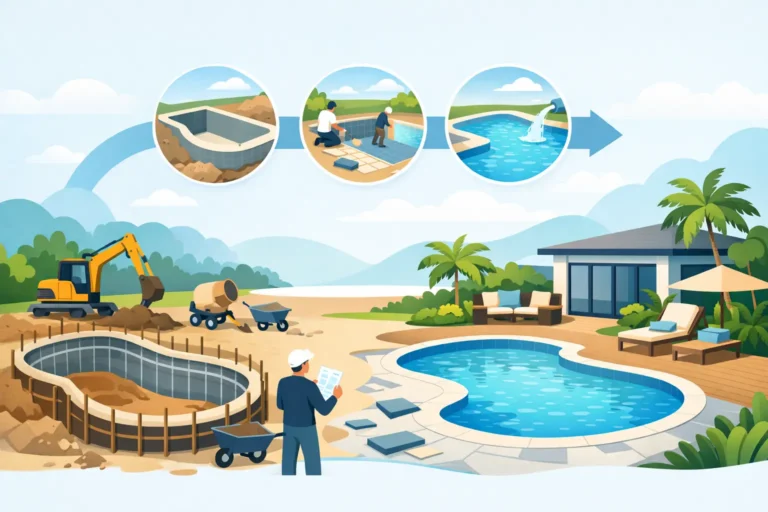
Building the waterfall alongside a new pool is generally the cleaner and more efficient option. The pool contractor can locate plumbing lines before shotcrete, establish the correct elevations, coordinate drains and returns, and integrate the feature with the equipment pad from day one.
Adding a waterfall to an existing pool may involve removing deck material, trenching for new plumbing, modifying coping or raised walls, and matching finishes that have aged over time. It can absolutely be done, but the scope needs to be evaluated honestly. A low initial quote that does not account for demolition, access, finish matching, or electrical upgrades can quickly become frustrating.
Plumbing, pumps, and automation
A waterfall only looks and sounds right when it receives the right volume of water. That may require a dedicated pump, additional plumbing runs, valves, and a properly sized filtration and circulation plan. Larger cascades and long sheer descents demand more flow than a small scupper, and undersizing the equipment can leave a premium feature looking weak.
High-efficiency variable-speed pumps and smart automation can help homeowners control the waterfall without wasting energy. With an integrated system, you can schedule water features, activate them from a phone or spa-side control, and adjust operation around entertaining or quiet evenings at home. Equipment adds to the upfront investment, but it protects the performance of the feature and gives the homeowner better day-to-day control.
Structural requirements and site access
Waterfall construction is not decorative work alone. A heavy stone feature must sit on a properly engineered, reinforced base. Reliable construction may include #4 steel rebar, 4,500 psi shotcrete, waterproofing systems, and appropriate drainage behind raised structures. These details are largely hidden once the project is complete, yet they determine whether the feature remains stable and attractive over time.
Limited backyard access can affect cost as well. If equipment cannot reach the work area directly, crews may need additional labor to move rock, soil, and materials. Hillside lots, existing retaining walls, utility locations, and drainage corrections can all change the construction plan. A professional site evaluation identifies these conditions before work begins, not after the pool deck has been opened.
Finish materials and lighting
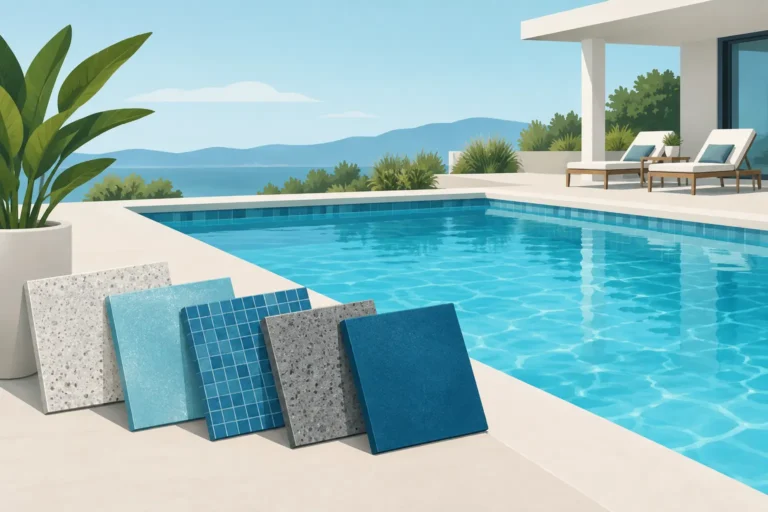
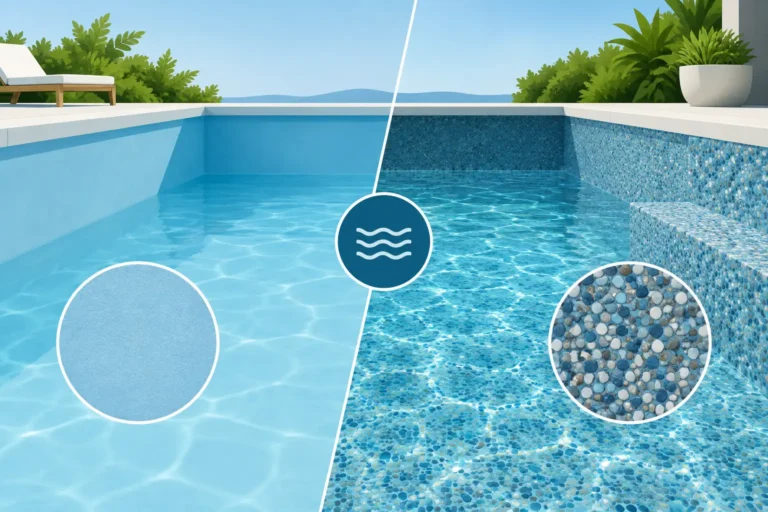
Tile, coping, veneer stone, and boulders create the visible character of the waterfall. Porcelain or glass tile can give a raised-wall spillway a refined, contemporary look. Natural ledger stone and hand-selected boulders create a more organic setting, especially when paired with a Baja shelf, mature landscaping, and warm-toned pavers.
Lighting is another consideration. Underwater LED lights can highlight falling water and add depth after sunset, while strategically placed landscape lighting makes the feature safer and more dramatic. These upgrades are optional, but they are often worth planning early because wiring and fixtures are easier to install before final hardscape and planting are complete.
Choosing the Right Waterfall for Your Backyard
The most expensive waterfall is not always the best investment. The right feature should fit the architecture of the home, the pool shape, the available space, and the way the family plans to use the yard.
A narrow side-yard pool may benefit from a simple raised-wall spillway that creates sound without overpowering the space. A larger backyard built for entertaining may call for a broad spa spillway, multiple sheer descents, or a stone feature that becomes the backdrop for an outdoor kitchen and lounge area. Families with young children may prefer a gentler, open design that preserves sightlines across the pool.
Sound matters, too. A tall, fast-moving cascade produces more noticeable water noise, which can be desirable near a busy street but less appealing close to bedroom windows or neighbors. During design, it is worth considering where you will sit, entertain, and relax. The goal is a personal oasis, not a feature that dominates every conversation.
How to Budget Without Compromising Quality
Start by separating the must-have structure from optional visual upgrades. The structural shell, plumbing capacity, waterproofing, and equipment should be specified for long-term performance first. Decorative tile, lighting packages, upgraded stone, and additional spillways can then be adjusted to align with the overall budget.
It is also smart to plan connected outdoor improvements together. A waterfall may look more complete when coordinated with pavers, drainage, landscaping, a fire feature, or an outdoor kitchen. Completing these elements through one design-build plan can reduce rework and create a more polished final result than adding disconnected features over several years.
Ask your contractor what is included in the waterfall scope. A clear proposal should address the feature structure, plumbing, pump requirements, finishes, electrical work, controls, drainage, and any demolition or deck repair involved. It should also clarify the anticipated construction sequence and how the feature will be tested before final completion.
Is a Pool Waterfall Worth the Investment?
For homeowners who value outdoor entertaining, relaxation, and visual sophistication, a waterfall can be one of the most meaningful pool upgrades. It creates a stronger sense of separation from nearby homes, brings a calming water sound to the patio, and makes the backyard feel finished from every viewpoint.
Its resale impact depends on the neighborhood and overall project quality. A custom pool feature will not always return its full cost in a direct appraisal calculation. However, a high-quality outdoor environment can make a property more memorable, more marketable, and more enjoyable while you own it. Poorly built features do the opposite, which is why workmanship and structural integrity should remain central to the decision.
A waterfall should feel like it belongs to the pool, the home, and the way you live outside. High Level Services helps homeowners plan that balance with a free consultation and a clear construction scope, so the finished feature delivers beauty, reliable performance, and a backyard you will want to use every day.