A pool can look spectacular on a design rendering and still miss the mark once the family starts using it. Parents may want a safe space for younger swimmers, teens may want room to play, and adults may picture morning exercise or relaxed evenings with friends. That is why understanding what pool depth families need should happen before the first excavation begins. The right depth plan makes the pool more comfortable, safer to supervise, and far more useful over the years.
For most Southern California homeowners, the answer is not one universal depth. It is a thoughtful combination of shallow-water access, an active play zone, and enough depth for the activities your household will actually enjoy. A custom design gives each area a purpose without making the pool unnecessarily large, costly, or difficult to maintain.
What Pool Depth Families Need in a Custom Design
A family pool should be designed around people, not just dimensions. A couple with toddlers has different priorities than a household with confident teenage swimmers. Likewise, a homeowner who hosts weekend gatherings may need more standing room than someone focused on fitness laps.
The most successful family pools typically begin with a shallow entry area around 3 to 3.5 feet deep. This range gives many adults stable footing while providing a manageable space for children who are developing water confidence. It also creates a natural social zone where guests can stand, talk, and keep an eye on kids without remaining outside the pool.
From there, the floor can transition gradually into a mid-depth section of roughly 4 to 5 feet. This is where much of a family pool’s daily use happens. It supports casual games, floating, exercise, and active play without requiring every swimmer to tread water constantly.
A deeper end may range from 5.5 to 7 feet, depending on the pool’s intended purpose and the site conditions. That extra depth can be valuable for stronger swimmers, recreational jumping where appropriate, and a more dramatic visual profile. However, deeper is not automatically better. A deep end reduces the amount of standing-depth water, increases excavation and shotcrete requirements, and may not serve a family that primarily wants play space and entertaining areas.
Start With How Your Family Will Use the Water
The best pool depth is a practical decision, not a trend. Before selecting depths, consider who will use the pool during a typical week and how those habits may change over the next five to ten years.
Young Children Need Clear, Controlled Shallow Areas
For families with young children, a broad shallow zone is often more valuable than an oversized deep end. A Baja shelf, usually 6 to 12 inches deep, gives small children a place to splash under close adult supervision while parents relax nearby. It also works beautifully with in-water loungers, umbrellas, and a clean resort-style aesthetic.
A Baja shelf is not a substitute for supervision or proper pool safety measures. It is, however, a functional design feature that helps families use the pool comfortably before children are ready for deeper water. Pairing the shelf with wide steps and a visible transition into the shallow end can make movement through the pool easier to understand for children and guests alike.
School-Age Kids Often Need More Play Depth
As children become stronger swimmers, the middle of the pool becomes the center of activity. A gradual slope from approximately 3.5 feet to 5 feet gives them room for games while still allowing many adults to stand in portions of the pool.
This is also where a well-designed shape matters. A long, narrow pool may be ideal for laps but can feel restrictive for group play. A slightly wider section, tanning ledge, or integrated spa can give the backyard more flexibility without compromising the polished look of the overall design.
Teens and Adults May Value a Deeper End
Older children and adults tend to appreciate depth for swimming, floating, and recreation. But if diving is part of the conversation, it requires much more than simply selecting a deep number. Diving suitability depends on the pool’s shape, water depth, slope, diving equipment, structural design, and applicable safety requirements.
Never assume a pool is appropriate for diving because it has a 6- or 7-foot deep end. Your pool contractor should address the intended use early in the design process and build the vessel to the necessary standards. In many family backyards, a non-diving pool with a comfortable deep end is the smarter choice because it preserves usable square footage and keeps the design focused on everyday enjoyment.
Why Gradual Transitions Matter
Depth changes affect safety, comfort, and the way a pool feels underfoot. A smooth, predictable slope helps swimmers recognize when they are moving from standing water into deeper water. Abrupt drops may create a more dramatic design, but they are not always the best fit for a family-centered pool.
Clear visual cues also matter. Tile lines, contrasting interior finishes, step placement, and thoughtfully placed lighting can help define depth changes after sunset. These details are not just decorative. They make the pool easier to read when children are playing, guests are visiting, or adults are supervising from the patio.
At High Level Services, pool design is approached as a complete outdoor-living project. That means considering the relationship between the water, decking, drainage, lighting, hardscape, and outdoor gathering areas rather than treating depth as an isolated measurement.
Pool Depth Affects Cost and Construction
A deeper pool requires more excavation, more soil removal, and additional structural material. In Southern California, where site access, elevation changes, soil conditions, and engineering can all affect a project, those added requirements should be evaluated honestly from the beginning.
Quality construction is particularly important when a pool includes varied depths, raised features, or an integrated spa. A properly engineered shell built with #4 steel rebar and 4,500 psi shotcrete provides the structural foundation a luxury pool needs. The goal is not to overbuild for appearances. It is to build a durable vessel designed for the soil, water load, and long-term use of the property.
Depth can also affect heating and operating costs. More water takes more energy to heat, and a large deep end may be less efficient if it is rarely used. High-efficiency equipment, automation, and a salt system can improve daily operation, but the most cost-conscious decision begins with selecting a pool size and depth profile that matches your lifestyle.
A Balanced Family Pool Layout
For many households, the strongest layout includes several water experiences in one cohesive design: a Baja shelf for lounging and small children, broad entry steps, a shallow play area, a gradual mid-depth zone, and a modest deep end for stronger swimmers. This approach avoids the all-or-nothing choice between a shallow social pool and a traditional deep-end pool.
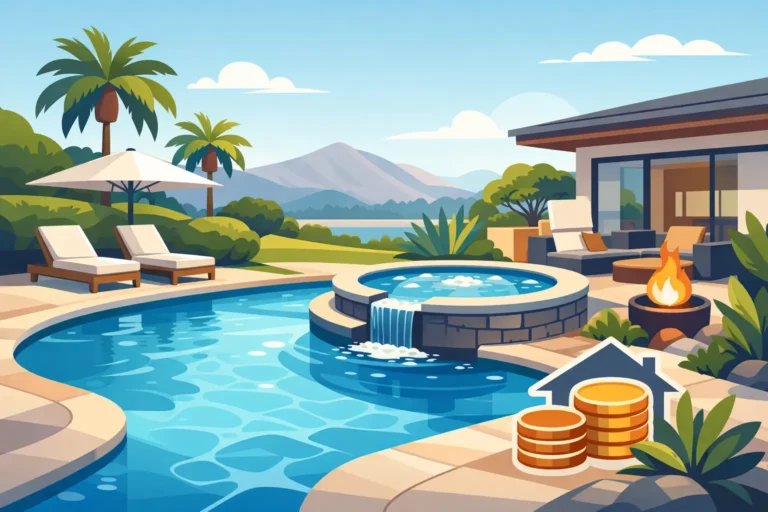
An integrated spa can further improve the design by creating a year-round destination for adults while the pool remains the centerpiece for family activity. Waterfalls, fire features, premium pavers, and outdoor kitchens can elevate the setting, but they should support the way the family uses the backyard rather than compete with it.
For a compact yard, careful depth planning becomes even more valuable. A smaller pool with a generous shelf and useful 3.5- to 5-foot play area often delivers more daily enjoyment than a deeper pool that sacrifices functional shallow water. In a larger backyard, a longer pool may accommodate both recreation and fitness while maintaining an elegant transition between depths.
Questions to Answer Before Finalizing Pool Depth
Your design consultation should make it easy to discuss real use, not just visual preferences. Consider whether children will be learning to swim in the pool, whether adults want to stand and socialize in the water, how often you expect to host guests, and whether lap swimming is a serious priority. Also consider future needs. A pool should remain enjoyable as children grow, entertaining habits evolve, and the home becomes a longer-term investment.
Ask how the proposed depth affects excavation, engineering, equipment selection, and maintenance. Review where steps, benches, ledges, and depth markers will be placed. If the pool is intended for jumping or diving, request a direct explanation of the safety and structural requirements rather than relying on assumptions.
A reliable contractor will give you clear answers and show how each decision affects the complete build. That level of planning protects both the finished result and the value of your investment.
The right pool depth gives every family member a reason to step outside more often. When the design balances safety, comfort, structural quality, and the way you truly live, your backyard becomes more than a beautiful feature – it becomes a personal oasis built for the years ahead.