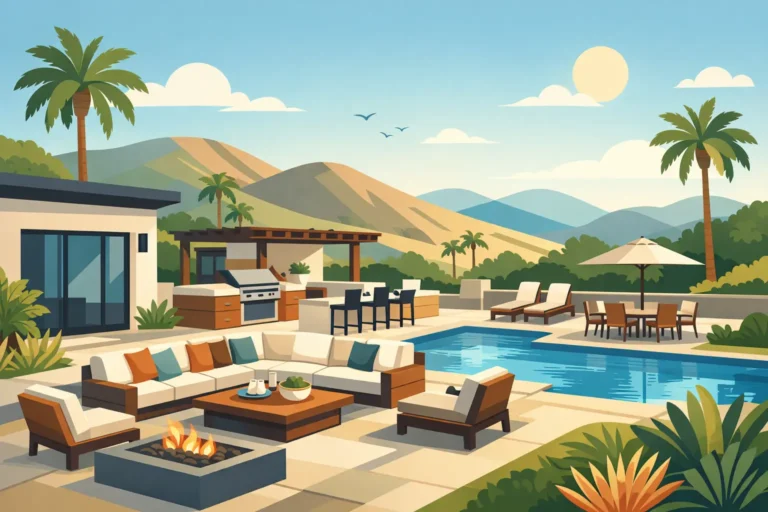
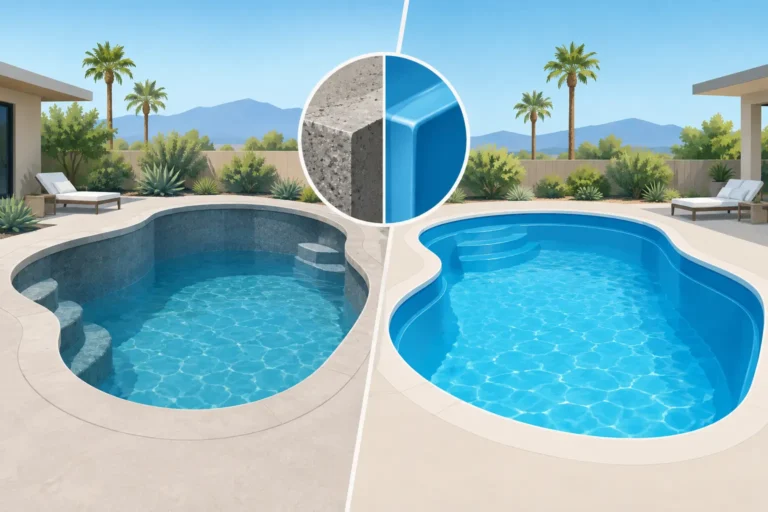
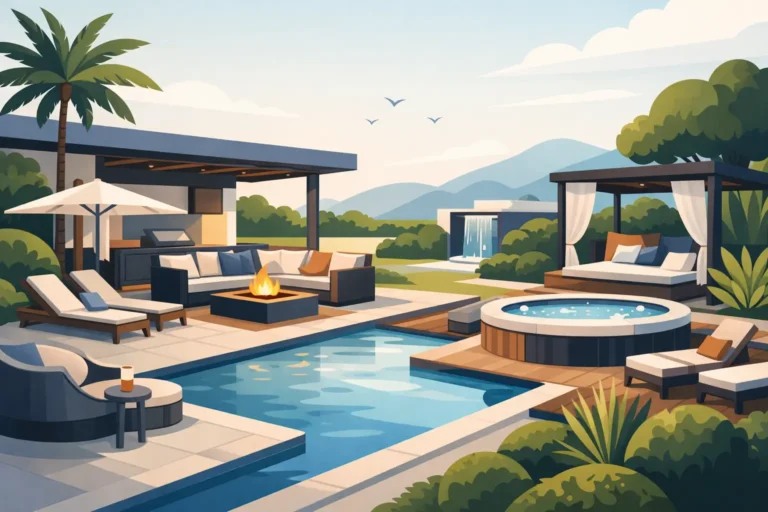
A pool with spa cost is never just the price of a hole in the ground filled with water. For Southern California homeowners, it is the cost of creating a personal oasis that works beautifully in the heat, supports the way your family entertains, and holds its value through years of daily use. The right number depends on the pool’s size, site conditions, structural requirements, equipment, finish selections, and how completely you want to transform the surrounding backyard.
For a professionally built custom pool and integrated spa in the Santa Clarita Valley, San Fernando Valley, Los Angeles, and surrounding areas, a realistic starting investment is often around $100,000. A more detailed luxury outdoor environment with upgraded finishes, water features, hardscaping, outdoor living elements, and challenging access can range from $150,000 to $250,000 or more. A precise proposal should be based on an on-site evaluation, not a generic online estimate.
What Drives Pool With Spa Cost?
A spa is not a small add-on in the way a homeowner might add a bench or an umbrella. An integrated spa needs its own plumbing design, jets, air system, heater capacity, controls, coping, waterproofing, and interior finish. It must also be engineered to connect correctly with the pool shell, particularly when the spa is raised and includes a spillway flowing into the pool.
The shell is the foundation of the investment. High-quality construction begins with excavation, steel placement, plumbing, electrical work, and shotcrete. A durable pool structure should be designed for local soil conditions and built with structural integrity in mind, including #4 steel rebar and 4,500 psi shotcrete where specified. Those standards are not cosmetic upgrades. They help create a pool that can handle ground movement, constant water pressure, and decades of use.
Then there is the difference between a basic pool and a fully considered outdoor environment. A clean rectangular pool with a compact attached spa will typically cost less than a freeform design with a Baja shelf, perimeter-overflow spa, multiple waterfalls, custom tile, and broad paver decking. Neither approach is automatically better. The best design is the one that fits the property, lifestyle, and investment level without sacrificing quality where it matters most.
Typical Cost Ranges for a Custom Pool and Spa
Every property deserves a custom estimate, but planning ranges help homeowners set expectations before design begins. In Southern California, a straightforward custom pool with an attached spa, standard waterline tile, reliable equipment, and a quality interior finish may begin near the low six figures. Costs rise as the pool becomes larger, deeper, more detailed, or more integrated with the rest of the yard.
A mid-range luxury project often includes a larger pool footprint, raised spa, upgraded tile and coping, a Baja shelf, saltwater system, automation, LED lighting, and meaningful deck or paver work. This is where many homeowners land when they want a polished backyard built for both family time and entertaining.
Higher-end projects can exceed $200,000 when they include complex engineering, hillside or access challenges, retaining walls, extensive drainage work, premium stone, elaborate water features, outdoor kitchens, fire features, and major landscape or hardscape construction. These projects require careful coordination because the pool is only one part of the finished experience.
A low bid can be tempting, especially when comparing drawings that look similar at first glance. The question is whether the proposal includes the structural, mechanical, and finish standards needed for a durable result. Comparing totals without comparing specifications can lead to expensive surprises during construction or disappointing performance after the project is complete.
Site Conditions Can Change the Budget Quickly
The backyard itself has a major influence on cost. A flat lot with generous side-yard access is generally simpler to build than a sloped property where machinery cannot reach the excavation area. Tight access may require smaller equipment, more labor, or specialized removal methods. Hillside conditions can introduce retaining, drainage, and engineering needs that must be addressed before pool construction begins.
Soil, underground utilities, existing concrete, mature trees, and property setbacks also affect planning. In established Los Angeles-area neighborhoods, it is common to find conditions that are not visible until the site is evaluated. Responsible contractors account for those realities early rather than promising an unrealistically low number and introducing change orders later.
Permitting and plan review are another practical consideration. The construction phase for a well-organized pool project may be completed in approximately five to six weeks once work begins and conditions allow, but permit processing, utility coordination, inspections, weather, and material lead times can affect the total calendar schedule. Clear communication about both construction duration and pre-construction planning gives homeowners a more reliable picture of the project.
Equipment and Features Worth Budgeting For
The equipment behind the pool affects comfort, operating costs, maintenance, and everyday convenience. A properly sized high-efficiency pump, filtration system, heater, and controls can make ownership easier while helping the pool perform as designed. For a pool and spa combination, heater capacity deserves particular attention. A spa should heat efficiently and maintain a comfortable temperature when you are ready to use it.
Salt systems and smart automation are popular investments because they simplify routine ownership. With automation, homeowners can manage lighting, circulation, water features, and spa settings from a convenient control interface. That means less time managing equipment manually and more time enjoying the backyard.
Features that can significantly influence the final pool with spa cost include:
- A raised spa with a tiled spillway or custom stone face
- Baja shelves, tanning ledges, and in-water lounge areas
- Waterfalls, sheer descents, bubblers, and deck jets
- Premium porcelain, glass, or natural-stone tile and coping
- LED color lighting, saltwater sanitation, and smart automation
- Paver patios, outdoor kitchens, fire features, and shade structures
These selections should support how you will actually use the space. A family with young children may value a broad Baja shelf and durable pavers. Homeowners who host frequently may prioritize a raised spa, outdoor kitchen, and generous deck circulation. A real-estate-conscious owner may focus on a timeless design palette that feels elevated without becoming too personalized for future buyers.
Do Not Overlook the Finish and Surrounding Hardscape
Interior finish is a key durability and visual decision. It establishes the pool’s water color, texture, and long-term appearance. Depending on the material selected and how the pool is maintained, a quality interior finish can provide approximately 15 to 25 years of service. This is an area where choosing an experienced installer and appropriate material specification protects the larger investment.
Hardscape deserves the same level of planning. New pool construction often requires removal and replacement of existing concrete, grading, drainage improvements, and new decking around the water. Pavers can provide a refined, durable surface with design flexibility, while natural stone offers a high-end look when properly selected for heat, traction, and maintenance expectations.
The goal is not to fill every corner with features. It is to create elegant spaces with comfortable circulation, practical drainage, and a finished appearance that makes the pool feel like it always belonged to the home. When the deck, coping, pool tile, landscape, and exterior architecture work together, the backyard has a more cohesive and valuable presence.
How to Plan a Confident Investment
Start by deciding what matters most: exercise, family use, entertaining, relaxation, or improving the property’s resale appeal. That priority should guide the design before feature selections begin. A beautiful spa that is too small for the household, or a dramatic pool with too little usable deck space, can limit the enjoyment of an otherwise expensive project.
Next, ask for a detailed scope that separates core construction from optional enhancements. You should understand the proposed pool dimensions, depth, steel and shotcrete standards, plumbing and equipment, interior finish, tile allowance, decking, electrical work, permitting responsibilities, and anticipated exclusions. A transparent proposal makes it easier to compare contractors on craftsmanship and scope rather than headline price alone.
High Level Services approaches pool construction as a complete design-build project, coordinating the structural work, equipment, finishes, and surrounding outdoor improvements under one accountable team. That approach helps prevent the gaps that can occur when homeowners are left to manage several separate trades.
Your backyard should feel exceptional long after the first swim. The most worthwhile investment is not the cheapest pool and spa on paper, but the one designed for your property, built with durable materials, and completed with the care needed to make daily life at home feel better.