A pool decision in Southern California is rarely just about swimming. It affects how your family gathers, how your yard functions, and how confidently you can invest in the property for years ahead. When homeowners compare gunite versus fiberglass pools, the right answer usually comes down to one question: Do you want a pool designed around your backyard, or a backyard designed around a pre-made pool shell?
Both options can create a beautiful place to cool off, entertain, and enjoy the California climate. Yet they differ significantly in design flexibility, construction method, long-term maintenance, and how well they accommodate the luxury outdoor features many homeowners want.
Gunite Versus Fiberglass Pools: The Core Difference
A fiberglass pool arrives as a factory-manufactured shell. It is transported to the property, set into an excavated area, leveled, plumbed, and backfilled. Because the shell is molded before it reaches your home, its size, shape, depth, and configuration are selected from an existing catalog.
A gunite pool is built on site. After excavation, an experienced pool contractor forms the shell with engineered steel reinforcement and applies shotcrete or gunite to create the structure. This process allows the pool to follow the dimensions, slope, architecture, and lifestyle goals of the property instead of requiring the property to fit a predetermined mold.
For a homeowner seeking a straightforward, compact pool in a yard with easy access, fiberglass can be a practical option. For a homeowner planning a true outdoor-living environment with a custom spa, Baja shelf, waterfall, tanning areas, or complex hardscaping, gunite provides a much stronger foundation for the vision.
Design Freedom Is Where Gunite Leads
A fiberglass shell can look polished, but it has fixed boundaries. You may choose among several sizes and colors, yet you cannot meaningfully alter the shell’s depth profile, widen a swim lane, curve it around a patio, or create a one-of-a-kind spa connection. This can become limiting in Southern California, where hillside lots, narrow side-yard access, irregular property lines, and existing landscape features often shape the project.
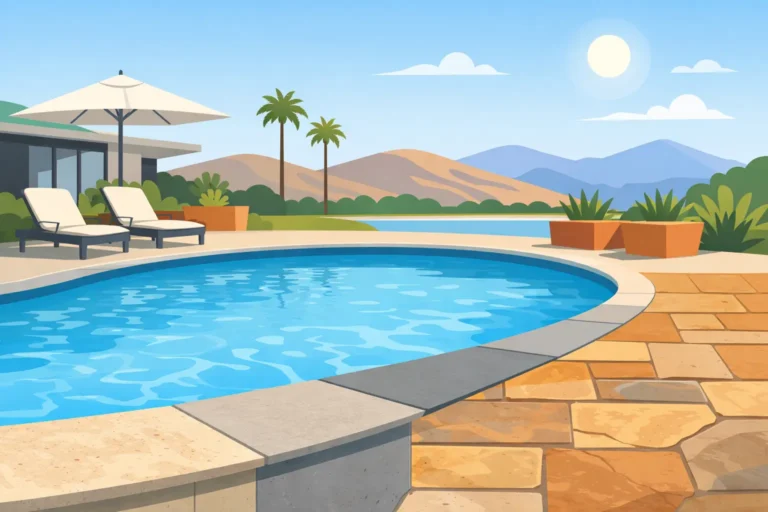
Gunite gives homeowners control over the details that make a pool feel intentional. A custom design can include a shallow Baja shelf for lounge chairs and young children, a raised spa that becomes a visual focal point, broad entry steps, bench seating, a negative-edge effect where appropriate, or a long lap lane for daily exercise. The pool can also be integrated with pavers, a covered patio, an outdoor kitchen, fire features, and planting areas so the entire yard reads as one finished space.
This flexibility matters for resale as well. A custom pool that complements the home’s architecture and uses the available yard wisely can feel like a permanent extension of the property. A shell that appears squeezed into an awkward space may deliver enjoyment, but it will not always produce the same visual impact.
The spa and feature question
Homeowners who want only a pool may find a fiberglass model sufficient. But once an integrated spa, spillway, sun shelf, waterfall, or custom waterline tile enters the conversation, gunite becomes the more natural choice. These features are not simply decorative additions. When planned together, they affect structural layout, plumbing, circulation, elevations, drainage, and the way people move through the space.
A design-build contractor can coordinate those decisions from the beginning rather than treating each feature as an afterthought.
Installation Time: Faster Delivery Is Not Always a Faster Project
Fiberglass is often promoted for quick installation, and the shell placement itself can be fast. If the site is accessible, permitting is complete, and there are no complications, setting a fiberglass shell may take only a short portion of the overall build.
However, the pool shell is not the entire project. Excavation, soil conditions, utility planning, permits, plumbing, electrical work, equipment setup, decking, drainage, fencing, landscaping, and final inspections still require careful coordination. A crane may also be necessary to lift the shell over a home or into a confined yard, which adds cost and logistical considerations.
Gunite construction has more on-site stages, including rebar, shotcrete application, curing, tile, coping, and interior finish work. That said, a well-managed contractor with a clear schedule can keep the process moving. High Level Services structures its custom pool projects around a defined five-to-six-week construction timeline, while recognizing that permitting, weather, inspections, specialty finishes, and site conditions can affect the full project schedule.
The better question is not only, “Which pool gets installed first?” It is, “Which process delivers the finished backyard I actually want without avoidable compromises?”
Structural Strength and Long-Term Durability
A properly built gunite pool is a permanent structural improvement. Its strength begins below the surface with excavation, steel placement, engineering considerations, plumbing installation, and the quality of the shotcrete application. Premium construction specifications such as #4 steel rebar and 4,500 psi shotcrete create a durable shell designed for long-term use.
This is particularly relevant in areas where soil movement, grading, and drainage must be considered carefully. No pool type is maintenance-free or immune to site-related issues, but a custom gunite approach allows the contractor to respond to the realities of the property rather than relying on a fixed shell.
Fiberglass shells are durable and generally resist algae because of their smooth, nonporous surface. They can also handle normal use very well when installed correctly. Their limitation is less about day-to-day toughness and more about the constraints of a pre-manufactured structure. If the site requires unusual engineering, a highly customized layout, or substantial integration with masonry and elevation changes, the shell format offers fewer solutions.
Maintenance and Interior Finishes
Fiberglass has a reputation for simpler routine upkeep, largely because its gelcoat surface is smooth. Less surface texture can mean fewer areas for algae to cling to, and many owners appreciate the lower-maintenance appeal.
Gunite requires a more active commitment to water balance and surface care, especially depending on the chosen interior finish. But maintenance should be evaluated honestly. Modern high-efficiency circulation equipment, variable-speed pumps, salt systems, automated controls, and properly designed hydraulics make daily pool ownership far more manageable than it once was. With the right equipment package, homeowners can monitor temperature, lighting, filtration schedules, and water features from a smart device.
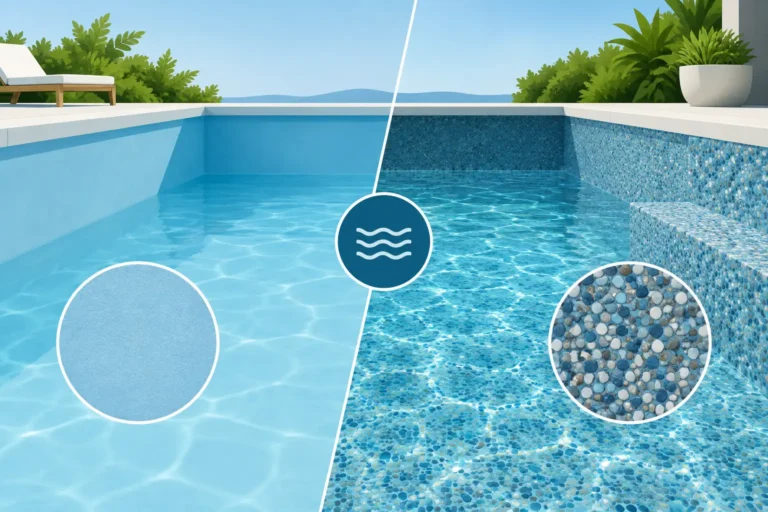
Gunite also offers more finish options. From classic plaster to premium pebble interiors, homeowners can select a color and texture that supports the home’s design. High-quality interior finishes can provide approximately 15 to 25 years of service when the pool is maintained correctly, although actual longevity depends on water chemistry, use, and care.
Cost: Look Beyond the Starting Number
A fiberglass pool may carry a lower initial price in some standard installations. But the comparison can shift quickly when the project requires crane access, extensive decking, retaining work, upgraded equipment, landscaping, custom coping, or a spa. Those supporting elements are often necessary regardless of the pool type.
Gunite generally represents a larger initial investment because it is custom-built and labor-intensive. The value is in what that investment can accomplish: a pool sized for the property, structural craftsmanship suited to the site, and an outdoor environment built around the way your household lives.
Consider the full scope before comparing quotes. A lower number is not automatically a better value if it excludes equipment quality, electrical work, drainage, finish selections, permits, or the hardscape needed to make the pool area usable. Clear specifications protect homeowners from surprises and make it easier to compare construction proposals fairly.
Which Pool Is Right for Your Backyard?
Fiberglass may be the better fit when you have a relatively open yard, prefer a standard shape, want a smaller or more conventional pool, and place speed of shell delivery above customization. It can be an efficient choice for homeowners whose plans align closely with available shell designs.
Gunite is often the better fit when the backyard has a unique shape, the home calls for a tailored architectural look, or the project includes a spa, Baja shelf, water features, premium tile, and outdoor-living construction. It is also the stronger choice for homeowners who view the pool as a long-term property investment rather than a standalone addition.
The most reliable way to decide is to begin with the property itself. A thoughtful site review should account for access, slope, soil, utilities, sun exposure, drainage, desired features, budget priorities, and the way you want the yard to feel on an ordinary Tuesday as much as on a weekend gathering. A well-built pool should not merely fill open space. It should give your home a more useful, elegant place to live.