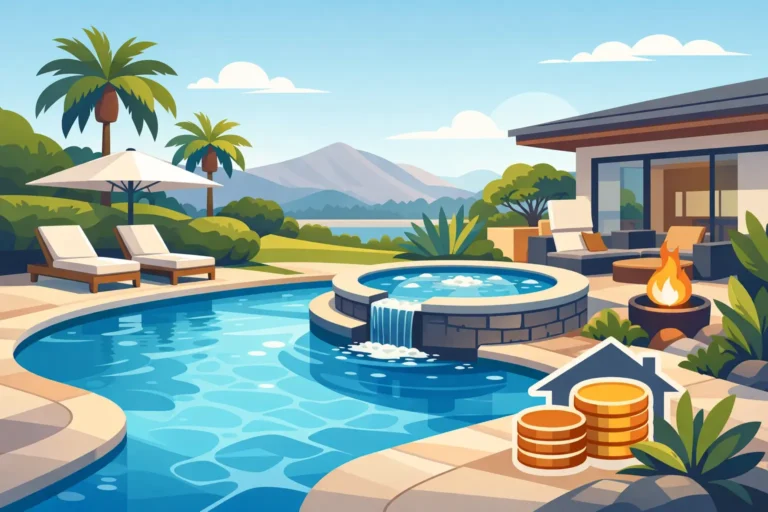
A beautiful pool should feel like the center of family life, not a source of uncertainty when children, pets, or guests are in the backyard. The best pool safety features work together as a complete system: they control access, improve visibility, reduce slip hazards, and help prevent equipment-related risks without taking away from a refined outdoor design.
For Southern California homeowners, safety deserves consideration at the earliest design stage. A pool is a major lifestyle and property investment, and the right features can be integrated into the layout, hardscape, lighting, and equipment plan rather than added later as an awkward compromise. Local requirements vary by property and municipality, so a qualified pool contractor should always build the final plan around applicable codes and your household’s needs.
Why Layered Pool Safety Matters
No single product makes a pool completely safe. A fence can limit entry, but it cannot replace supervision. An alarm can provide an alert, but it does not prevent a child from reaching the water. The most reliable approach is layered protection, with physical barriers, dependable equipment, clear sightlines, and household rules all supporting one another.
This approach also gives homeowners more flexibility. Families with young children may prioritize a removable mesh barrier and a self-closing gate. Homeowners who entertain often may place more emphasis on elegant perimeter fencing, illuminated walking surfaces, and automation that confirms the pool has been secured at night. The strongest design is the one that fits how the backyard will actually be used.
1. A Code-Conscious Perimeter Barrier
A properly designed barrier is the foundation of pool safety. Depending on your property layout, that may mean a perimeter fence, a wall, or another compliant enclosure that separates the pool area from the home and yard access points. The objective is simple: prevent unsupervised access to the water.
For luxury backyards, the barrier does not have to look institutional. Powder-coated aluminum, glass panels, masonry walls, and carefully planned landscape screening can complement contemporary pavers, outdoor kitchens, and elevated patio spaces. The trade-off is visibility. Dense planting may soften the setting, but it should never create blind spots near gates or pool edges. A well-planned barrier protects the pool while preserving the clean lines of the overall design.
2. Self-Closing, Self-Latching Gates
A gate is only effective when it closes and latches every time. Self-closing hinges and a self-latching mechanism reduce the risk of a gate being left open after someone carries in groceries, moves patio furniture, or follows guests outside.
Gate hardware should be specified for frequent outdoor use, not treated as an afterthought. Southern California sun, moisture, chlorine exposure, and daily traffic can wear down low-quality components. Durable hinges, secure latches, and professional installation are worth the investment because a gate is one of the most used parts of any pool enclosure. Keep furniture, planters, and other climbable objects away from the barrier as well.
3. A Safety Cover Designed for the Pool
A properly fitted safety cover creates a substantial physical layer of protection when the pool is not in use. It can also help reduce debris, evaporation, and heat loss, which makes it valuable from both a safety and maintenance perspective.
Not every cover serves the same purpose. A floating solar cover may help retain heat, but it is not a substitute for a rated safety cover. Automatic covers are convenient and can disappear into a discreet housing system, making them especially attractive for homeowners who want a polished, low-effort solution. They do require regular inspection and maintenance, and they should never be operated with people or pets in the pool.
4. Door, Gate, and Water Alarms
Alarms add an active warning layer to barriers and covers. Door alarms can alert you when a door leading toward the pool area is opened. Gate alarms notify you when access points are used. Water-entry alarms can detect unexpected surface movement once someone or something enters the pool.
The best setup depends on the property. A home with multiple rear doors may benefit from monitored door alarms, while an open entertaining yard may need gate and water alarms as added protection. Alarms are most useful when they are loud enough to be heard inside the home and are tested routinely. They should support attentive supervision, never create a false sense that supervision is no longer needed.
5. Non-Slip Decking and Drainage
Most poolside injuries happen on the deck, not in the water. Quality hardscaping makes a meaningful difference here. Textured pavers, properly finished concrete, and other slip-resistant materials can offer traction while still delivering the high-end appearance homeowners expect from a custom outdoor environment.
Drainage is equally important. Water should move away from walking paths, outdoor kitchens, steps, and seating areas instead of collecting in slick patches. In a custom build, deck slope, drain placement, material transitions, and the connection between the pool coping and patio should all be planned as one system. A flawless-looking deck that holds water is not a high-quality result.
6. Clear Steps, Depth Markers, and Visual Contrast
The pool should be easy to read at a glance. Clearly defined entry steps, visible depth transitions, and contrasting finishes at stair edges help swimmers understand where they are placing their feet. This matters especially when the sun is low, the water is moving, or children and older guests are using the pool.
A Baja shelf can be a comfortable place to relax or supervise younger swimmers, but its edges should remain visually distinct from deeper water. The same principle applies to tanning ledges, benches, raised spas, and swim-up features. Design details that improve orientation can be incorporated elegantly through tile lines, finish color, LED lighting, and thoughtful geometry.
7. Properly Designed Drains and Suction Protection
Pool circulation equipment must be engineered to minimize entrapment risk. This includes compliant drain covers, appropriate suction design, and properly installed equipment selected for the pool’s size and configuration. It is a technical area where experienced construction and equipment installation matter far more than a cosmetic upgrade.
Homeowners should also keep drain covers intact and replace damaged or missing covers promptly. Never allow anyone to sit on or play near a pool drain. A professional should evaluate equipment changes, pump upgrades, or drain repairs rather than relying on a quick patch. The circulation system should be efficient, reliable, and built to current safety expectations.
8. Smart Automation With Remote Monitoring
Modern automation gives homeowners greater control over pool lighting, pumps, water features, heating, and certain security-related settings from a central panel or mobile device. It is particularly useful for confirming that lights are on before guests arrive, scheduling filtration, and checking equipment status without walking to the pad.
Automation is not a replacement for physical barriers, but it can reinforce good safety habits. Timed lighting improves nighttime visibility. Equipment alerts can help identify an issue before it becomes a larger repair. For an integrated pool and spa, a high-efficiency system with well-organized controls also reduces the daily friction that causes homeowners to postpone maintenance.
9. Purposeful Lighting Around the Entire Pool Area
Night swimming and outdoor entertaining require more than decorative water lights. Paths, steps, gate areas, patio transitions, and equipment access points need dependable illumination so people can move confidently around the yard. Low-voltage LED lighting is efficient, long-lasting, and available in styles that complement both modern and traditional outdoor spaces.
Avoid creating dramatic dark zones for the sake of ambiance. The goal is controlled, comfortable light that defines circulation routes without overwhelming the backyard. Lighting should also be planned around landscape growth, furniture placement, and the way people travel between the house, pool, spa, outdoor kitchen, and seating areas.
Build Safety Into the Design, Not Around It
The best time to make smart safety decisions is before excavation begins. During the design-build process, a contractor can coordinate barrier locations, gate swings, deck drainage, electrical planning, lighting, equipment placement, and sightlines with the pool’s structure and surrounding hardscape. That produces a cleaner result than trying to solve every issue after the pool is complete.
High Level Services approaches custom pool construction as a complete outdoor-living project, combining durable specifications such as 4,500 psi shotcrete, #4 steel rebar, high-efficiency equipment, salt systems, and automation with the details that make a backyard easier to enjoy confidently. A free consultation is an opportunity to discuss how your family uses the space, where risks may exist, and which protections belong in the design from day one.
A personal oasis should invite people outside while giving you confidence after the last towel is picked up and the backyard goes quiet. Choose features that protect the people you love, withstand daily use, and fit the quality of the home you are building around them.