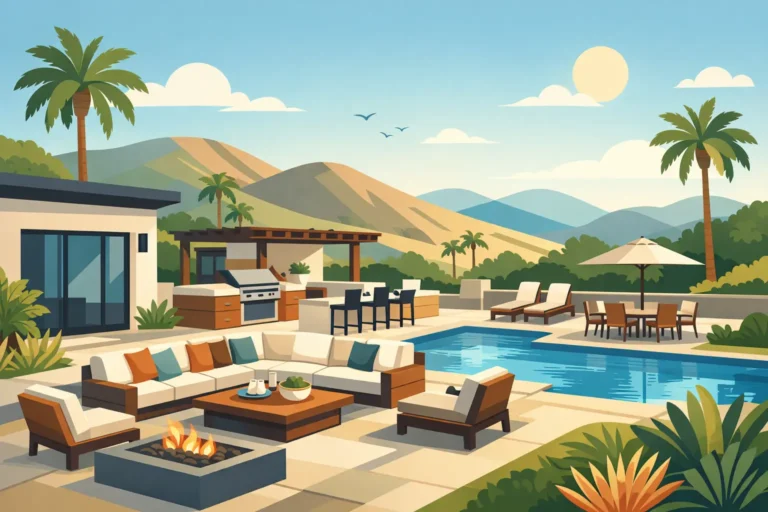
A pool’s interior finish is what your family sees, feels, and lives with every day. The choice between plaster versus pebble affects far more than water color. It influences comfort underfoot, long-term maintenance, renovation timing, and the overall level of finish in a custom Southern California backyard.
For homeowners building a personal oasis in Santa Clarita, the San Fernando Valley, Los Angeles, or nearby communities, the better option is rarely the one with the lowest starting price. It is the finish that fits the pool’s design, the way the space will be used, and the level of durability expected from a major property investment.
Plaster Versus Pebble: The Core Difference
Traditional pool plaster is a smooth cement-based finish, usually made with white cement, marble aggregate, water, and pigment. It has been a familiar choice for generations because it creates a clean, classic pool surface with a soft feel and a comparatively approachable upfront cost.
Pebble finishes are exposed-aggregate interiors. During installation, the finish is applied and then carefully washed to reveal small, naturally durable stones at the surface. The visible aggregate gives the pool more depth, texture, and variation than standard plaster. It also creates a finish engineered for greater resistance to staining, etching, and daily wear.
Both finishes can look beautiful when installed by experienced pool professionals. The difference is that plaster delivers a refined, uniform appearance, while pebble creates a more dimensional, high-end effect with stronger long-term performance.
When Plaster Is the Right Choice
Plaster remains a valid finish for a homeowner who wants a smooth pool interior, a timeless blue-water appearance, and a controlled initial budget. White plaster is especially well suited to traditional pool designs where the goal is bright, clear water and simple architectural lines.
The surface is generally gentler on bare feet than an exposed pebble interior. That can be appealing for families with young children, older swimmers, or anyone who wants a softer feel while sitting on a Baja shelf or standing near entry steps.
Plaster also allows a pool renovation to make an immediate visual impact without committing as much of the project budget to the interior finish. When a homeowner is also investing in pavers, a covered patio, a built-in outdoor kitchen, or landscape improvements, this can be a practical allocation decision.
Still, traditional plaster requires realistic expectations. It is more susceptible to discoloration, mottling, chemical etching, and visible wear over time. In Southern California, where pools may be used nearly year-round and receive significant sun exposure, plaster typically does not offer the same service life as a premium pebble finish. Proper water balance helps protect it, but maintenance cannot completely eliminate the natural aging of a cement-based surface.
Why Pebble Is Often the Premium Pool Finish
For a custom pool designed as a long-term outdoor-living investment, pebble is often the stronger choice. The exposed aggregate has a more natural visual character, producing water colors that can range from crisp blue to deep lagoon tones depending on the selected blend, pool depth, surrounding hardscape, and sunlight.
Pebble finishes are known for durability. The aggregate surface is less vulnerable to many of the issues that can make aging plaster look tired, including staining, fading, and rough chemical wear. While every pool interior will eventually need attention, a well-installed pebble finish can commonly provide 15 to 25 years of service with attentive water chemistry and routine care.
That longevity matters when the pool shell itself is built to a high standard. A luxury pool with 4,500 psi shotcrete, properly placed #4 steel rebar, reliable circulation, high-efficiency equipment, salt-compatible systems, and automation deserves an interior finish that supports the same level of long-term performance.
Pebble also pairs naturally with the features many homeowners want in a modern backyard: tanning ledges, integrated spas, waterfalls, raised bond beams, fire features, and expansive paver decks. Its visual variation complements natural stone and contemporary outdoor finishes without making the water feel flat or overly artificial.
The trade-off is texture. Pebble is not as smooth as plaster, and some aggregate blends feel more pronounced underfoot than others. A skilled design-build contractor can help narrow the selection based on how the pool will be used, especially if the project includes a large Baja shelf where people will stand, lounge, and play.
Cost Should Be Evaluated Over the Life of the Pool
Plaster usually costs less at installation. Pebble costs more because of the material itself, the application process, and the craftsmanship required to expose the aggregate evenly. That difference can be meaningful in the initial construction budget.
However, the better financial question is not simply, “What does it cost today?” It is, “What will this finish require over the next 15 to 20 years?” A lower-cost plaster surface may need refinishing sooner, particularly if it develops staining, roughness, etching, or visible color inconsistency. A premium pebble surface often carries a higher upfront investment but can delay that renovation cycle.
There is no universal winner for every project. If the pool is being built for a shorter ownership horizon or the design calls for a classic smooth white finish, plaster may be the right decision. If the homeowner plans to enjoy the property for many years and wants a finish that supports resale appeal, pebble frequently offers better long-term value.
Water Color Changes More Than Most Homeowners Expect
Homeowners often choose an interior finish from a small sample, then expect the pool to look exactly like that sample in every condition. In reality, water color is shaped by several factors: finish color, water depth, sky conditions, pool orientation, tile selection, nearby walls, landscaping, and even the color of the pavers around the pool.
A light plaster finish can create a bright, inviting blue that suits a clean, classic backyard. Medium and dark pebble blends can produce greater depth and more dramatic water color, particularly in pools with deeper center sections or vanishing-edge-style design details.
Before selecting either finish, view full-size samples outdoors whenever possible. Hold them beside the proposed coping, tile, and deck material. A finish that looks perfect under showroom lighting may read differently under the strong Southern California sun.
Maintenance Expectations for Both Surfaces
Neither plaster nor pebble is maintenance-free. Both need consistent circulation, filtration, brushing, debris removal, and balanced water chemistry. Poorly balanced water can damage any cementitious pool finish and may shorten its useful life.
New plaster requires a particularly careful startup period. The surface needs brushing and tightly managed chemistry while it cures. Skipping this early care can lead to uneven appearance, scaling, or premature surface issues.
Pebble is more forgiving over the long term, but it still benefits from professional water testing and equipment that keeps sanitization and circulation consistent. Automated controls, variable-speed pumps, and salt systems can make routine ownership easier, but they do not replace proper monitoring. Reliable equipment and correct chemistry work together to protect the finish homeowners paid for.
Choosing the Right Finish for Your Backyard Plan
The decision becomes clearer when it is tied to the entire project rather than made as an isolated line item. Consider the pool’s architectural style, how often it will be used, who will use it, the desired water color, and whether the goal is a straightforward backyard upgrade or a fully integrated luxury outdoor environment.
Choose plaster when smooth comfort, classic simplicity, and lower initial cost are the leading priorities. Choose pebble when durability, visual depth, and long-term performance carry more weight. For many custom pool projects, the premium finish is the one homeowners continue to appreciate long after construction is complete.
High Level Services helps homeowners evaluate those choices as part of a complete design-build plan, so the pool interior, structural build, equipment, hardscape, and outdoor features perform as one polished space. The most satisfying finish is the one that still looks intentional after years of family gatherings, summer afternoons, and everyday use.