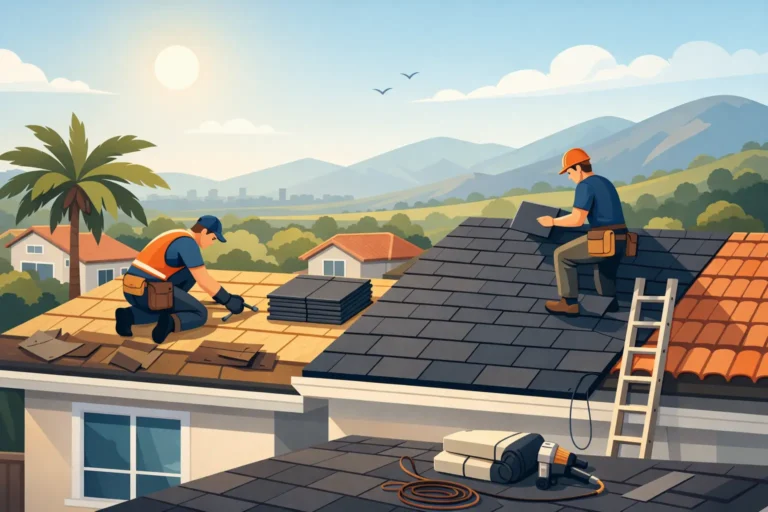
A Southern California roof takes a daily beating that is easy to underestimate. Intense UV exposure, long dry seasons, wind-driven debris, and sudden winter rain can gradually wear down a roof long before a leak appears inside. Roof coatings can be an effective way to extend the life of the right roofing system, improve heat reflectivity, and protect a property investment – but they are not a shortcut around needed repairs or replacement.
For homeowners who value durable craftsmanship and a clean, finished look, the right answer starts with an honest assessment of the roof beneath the coating. A professional coating system should reinforce a sound roof, not conceal an aging one.
What Roof Coatings Actually Do
A roof coating is a fluid-applied protective membrane installed over an existing roof surface. Once cured, it creates a continuous layer that helps shield the roof from ultraviolet rays, weather exposure, and minor surface deterioration. Many white or light-colored coatings also reflect solar heat, which can help reduce heat absorbed through the roof assembly.
Unlike a new roof installation, a coating generally works with the existing roof rather than removing it. That can make it a practical option for certain flat and low-slope roofs, including modified bitumen, metal, single-ply membranes, and some commercial roof systems. The suitability of a coating depends on the roof material, drainage, age, prior repairs, and overall condition.
The key word is protective. A coating can help preserve a roof with useful life remaining. It cannot correct wet insulation, extensive substrate deterioration, failed flashing, structural movement, or widespread leaks. Those conditions require repair or replacement before any protective system is considered.
When Roof Coatings Make Sense
The strongest candidates are roofs that remain structurally sound but are showing early signs of weathering. The surface may be chalking, losing reflectivity, becoming dry or brittle, or developing small seams and penetrations that need careful maintenance. In these cases, coating a properly prepared roof may delay a more disruptive replacement and provide a refreshed, uniform appearance.
Coatings are especially useful for low-slope areas where standing water, seams, and penetrations demand close attention. A properly specified system can create a monolithic surface across the field of the roof while reinforcing vulnerable details around vents, drains, parapet walls, and mechanical equipment.
For a residential property, this can be particularly valuable over patio covers, garage roofs, additions, detached structures, or flat-roof sections that receive constant sun. Commercial property owners may also benefit when a coating system fits their roof type and maintenance plan.
That said, a coating is not automatically the most economical choice. If a roof is already near the end of its service life, has recurring leaks in multiple areas, or has trapped moisture below the surface, investing in a new roofing system may offer better long-term value. A reliable contractor should explain that distinction clearly rather than pushing a coating as a one-size-fits-all solution.
Choosing the Right Roof Coating System
Not all coatings perform the same way, and material selection should be based on the roof, not simply the lowest bid. Acrylic, silicone, polyurethane, and asphalt-based systems each have different strengths.
Acrylic coatings are commonly selected for their reflectivity and cost efficiency. They can perform well in sunny, dry climates, but their performance depends on proper film thickness and drainage. Areas with frequent ponding water may require a different solution.
Silicone coatings are often chosen for their strong resistance to standing water and UV exposure. They can be an excellent fit for certain flat roofs, though surface preparation is critical and future recoating must be planned around product compatibility.
Polyurethane systems offer high durability and impact resistance, making them useful in areas subject to foot traffic or more demanding conditions. They may be specified as part of a multi-coat system where toughness and adhesion are priorities.
The right recommendation considers more than the coating itself. It includes the roof substrate, slope, drainage, seams, existing repairs, exposure to tree debris, and how the building is used. A rooftop with HVAC service traffic has different needs than a quiet residential patio cover.
Color and Reflectivity Matter in Southern California
A bright white coating is not only a design choice. Highly reflective surfaces can reduce solar heat absorption, helping keep the roof surface cooler during long periods of direct sunlight. That may support more comfortable interior conditions and reduce strain on cooling systems, particularly in rooms directly below low-slope roof areas.
Reflectivity should not be viewed as a guaranteed energy-savings figure. Insulation levels, attic ventilation, windows, HVAC performance, and the building’s orientation all influence results. Still, for many Southern California properties, a reflective coating is a practical layer of heat management as well as roof protection.
Preparation Determines the Performance of Roof Coatings
The coating application itself may look straightforward. The preparation behind it is where durable results are earned. A roof must be cleaned thoroughly so the new material can bond to a stable surface. Dirt, loose granules, oils, mildew, old failing patches, and residue can compromise adhesion.
Before coating begins, an experienced roofing team should inspect seams, flashings, drains, penetrations, transitions, and previous repair areas. Cracks and openings need to be repaired with compatible materials. Blisters, loose sections, and deteriorated edges must be addressed rather than coated over. Drainage should also be evaluated, because water that remains on the roof for extended periods can shorten the life of an improperly selected system.
Proper application requires attention to weather conditions, dry times, manufacturer specifications, and the required mil thickness. Applying too little material can leave the system underprotected. Applying coating over damp surfaces or unresolved defects can create a polished-looking roof that fails far too soon.
This is why a detailed scope matters. Homeowners should know what cleaning, repair work, reinforcement fabric, primers, coating layers, and warranty terms are included before work starts. Clear communication protects the project budget and prevents surprises after the crew arrives.
What a Coating Cannot Fix
A quality coating is a valuable maintenance and restoration option, but it has limits. It cannot restore rotted roof decking, solve a major framing issue, stop leaks caused by failed plumbing penetrations without repair, or compensate for a roof that drains poorly due to structural settlement.
It also cannot turn every steep-slope shingle roof into a coating candidate. Traditional shingle roofing is designed as a layered water-shedding system, and coating it without a system designed specifically for that application can interfere with performance, trap moisture, or create warranty concerns. The roof type should always guide the solution.
If interior staining, active leaks, sagging areas, soft spots, or repeated repairs are already present, a thorough inspection should come first. The smartest investment is not always the least disruptive one. Sometimes replacement is the dependable path to structural integrity and long-term confidence.
Maintaining a Coated Roof
Once installed, a coating system still needs periodic care. Keep drains and scuppers clear, remove accumulated debris, and inspect the roof after major storms or nearby tree work. Service personnel should avoid unnecessary damage from tools, sharp equipment, or unsecured foot traffic.
Annual inspections are a practical way to identify small issues before they become expensive ones. Attention is especially important at flashing details, penetrations, and any location where rooftop equipment is serviced. A repair completed early can preserve the larger coating system and protect the building below.
For homeowners planning a broader property upgrade, roofing should be considered alongside exterior improvements such as patio structures, outdoor kitchens, additions, and drainage work. Coordinating these elements helps protect finished spaces and prevents avoidable rework. High Level Services approaches roofing with the same focus on durable materials, precise execution, and clear project accountability that complex residential construction demands.
A well-specified roof coating should leave you with more than a brighter roof surface. It should give you confidence that a critical part of your home has been evaluated honestly, repaired correctly, and protected for the seasons ahead.