A Southern California roof can face punishing sun, Santa Ana winds, airborne debris, seasonal downpours, and wildfire exposure in the same year. To select durable roofing materials, homeowners need to look beyond color and curb appeal. The right choice is a complete system that fits the home’s structure, neighborhood requirements, climate exposure, and long-term plans for the property.
A roof is one of the most visible investments on your home, but its most valuable work happens out of sight. Quality materials, proper underlayment, reliable flashing, ventilation, and precise installation work together to protect finished interiors, outdoor living areas, and the property value you have built over time.
Start With Southern California’s Real Roofing Conditions
Not every part of Los Angeles County experiences the same conditions. A home in Santa Clarita may receive stronger wind events and wider temperature swings than a more sheltered property in the San Fernando Valley. Hillside homes can face greater wind exposure, while neighborhoods near brush may require a sharper focus on fire-rated assemblies. Coastal areas introduce salt air and moisture considerations.
This is why material selection should begin with a site evaluation, not a product brochure. A contractor should assess roof pitch, drainage paths, existing decking, attic ventilation, penetrations around vents and skylights, and transitions where the roof meets stucco, chimneys, or upper-level walls. The material may be premium, but weak flashing or inadequate drainage can shorten the service life of the entire roof.
Local code and HOA requirements matter as well. California homes commonly require a Class A fire-rated roof assembly, but the final rating depends on the complete installed system, not simply the visible roofing material. Confirming these requirements early avoids expensive changes after the design is approved.
How to Select Durable Roofing Materials by Performance
The best roofing material depends on the level of durability you need, the architectural style of your home, and the budget you want to protect over the long term. Price should be evaluated as installed value, not just as a cost per square. A lower initial price can become more expensive if the roof needs frequent repairs, struggles in high wind, or fails to complement a high-value exterior renovation.
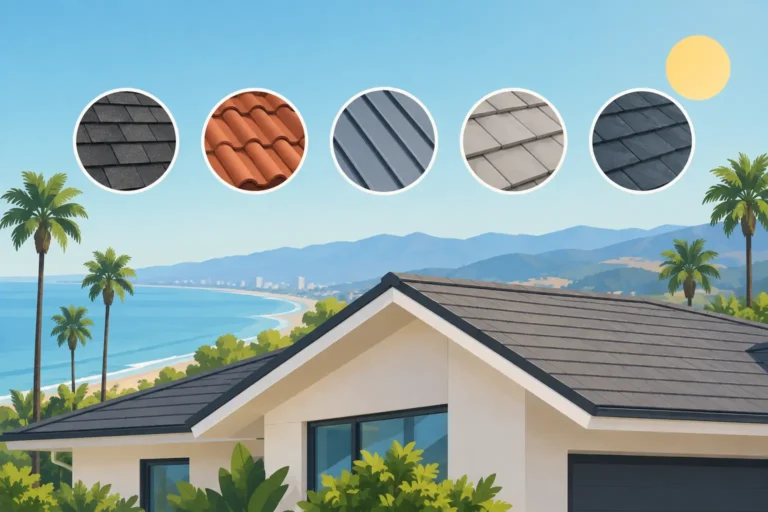
Architectural asphalt shingles
Architectural shingles remain a practical choice for many homes because they offer a clean appearance, broad color selection, and a reasonable installation cost. Higher-quality laminated shingles are thicker and more dimensional than basic three-tab products, creating better visual depth and generally stronger wind performance.
Their trade-off is lifespan. Even premium shingles can age faster under intense heat and UV exposure than tile, metal, or slate-style systems. They are often a sound solution for homeowners seeking dependable performance and a polished finish without the added structural demands of heavy roofing products.
Concrete and clay tile
Concrete and clay tile are natural fits for many Southern California homes. They offer enduring style, excellent fire resistance, and a long service life when properly installed and maintained. Clay brings distinctive color and character, while concrete tile can provide versatile profiles and a more controlled price point.
Tile is not maintenance-free. Individual tiles can crack from impact or improper foot traffic, and underlayment beneath the tile will eventually require attention. Weight is another major consideration. Before installing tile, a qualified contractor should verify that the roof framing can safely support the selected system. The visible tile may last for decades, but the underlayment, flashings, and fastening details determine whether the roof stays watertight.
Metal roofing
Metal roofing offers a refined, modern look and outstanding long-term durability. Standing seam panels, in particular, shed water efficiently, resist fire, and can perform well in wind when engineered and installed correctly. Reflective finishes may also help reduce solar heat gain, which is valuable during long Southern California summers.
The initial investment is usually higher than asphalt shingles, and installation quality is especially critical. Panels must be detailed carefully around valleys, penetrations, edges, and wall transitions. Homeowners should also discuss noise expectations, insulation, and the finish warranty. A high-quality metal roof can be an excellent investment for contemporary homes, hillside properties, and homeowners planning to stay for many years.
Slate and synthetic slate
Natural slate delivers exceptional longevity and a timeless luxury appearance, but it is heavy, costly, and requires specialized installation. It is typically best suited to homes whose structure and architectural design justify the investment.
Synthetic slate can provide a similar high-end look with less weight and, in many cases, improved impact resistance. Quality varies by manufacturer and product line, so evaluate fire ratings, UV stability, warranty terms, and how the material will look against your home’s exterior finishes. For a luxury property upgrade, the goal is not to imitate a material poorly. It is to choose a system that looks intentional and performs reliably.
Build the Roof as a System, Not a Surface
Durable roofing materials need a dependable foundation. The deck must be sound and properly prepared. Underlayment should be selected for the roof design and local climate. Flashing at chimneys, valleys, skylights, pipe penetrations, and roof-to-wall connections should be installed with care because these areas handle concentrated water flow.
Ventilation also affects performance. An attic that traps excessive heat and moisture can accelerate material aging, increase cooling demands, and create conditions that affect decking and insulation. The right ventilation approach depends on the home’s layout, roof geometry, and existing intake and exhaust paths.
For homes with solar panels, rooftop HVAC equipment, or future plans for additions, coordinate the roof design before work begins. Removing and reinstalling equipment later can add cost and introduce unnecessary risk. A contractor managing the overall scope can align the roofing work with exterior painting, solar planning, outdoor kitchen construction, or a broader property upgrade.
Match Material to Roof Pitch and Design Details
Roof pitch changes what materials can perform well. Steeper roofs shed water quickly and can accommodate a wider range of products. Low-slope sections need materials designed for slower drainage and standing water exposure. Using a steep-slope product where a low-slope membrane is needed is not a cosmetic mistake. It is a performance failure waiting to happen.
Complex rooflines also require more planning. Valleys, dormers, parapet walls, skylights, and intersecting planes create additional opportunities for water intrusion if details are rushed. A simple roof may allow more of the budget to go toward premium material. A complicated roof may benefit more from investing in superior waterproofing details and experienced installation.
Color deserves practical consideration, too. Lighter roof colors can help manage heat gain, while darker shades may better suit certain architectural styles. View samples outdoors at different times of day. The color should work with the stucco, stone, pavers, windows, and landscape design, especially when the home is being positioned as a cohesive, high-value property.
Ask Better Questions Before Approving a Roof
A professional proposal should make the scope clear. Before choosing a contractor and material, ask what will happen if damaged decking is discovered, how flashing will be handled, whether ventilation is included, and what manufacturer and workmanship warranties apply. You should also understand the schedule, site protection plan, cleanup standards, and who will communicate with you during construction.
Be cautious of estimates that focus only on a square-foot price. Roofing is not just the visible layer. The differences between a basic bid and a durable installation are often hidden in preparation, waterproofing, fastening, ventilation, and jobsite accountability.
High Level Services approaches roofing as part of the home’s larger construction system. Whether the project is a focused roof replacement or one element of a complete exterior transformation, the priority is durable craftsmanship, clear communication, and a finished result that supports the way you live in your home.
A roof should give you confidence when the wind rises, the temperature climbs, or the first hard rain arrives. Schedule a professional evaluation before selecting a material, and choose the system that protects your home beautifully for the years you plan to enjoy it.