A pool should not require a daily walk to the equipment pad, a guess about whether the spa is warm enough, or an after-dinner scramble to turn on the lights. Automating pool equipment puts the important controls in one place, allowing homeowners to manage circulation, heating, sanitation, lighting, water features, and spa settings with a wall panel, remote, or smartphone.
For Southern California homeowners, that convenience has real value. A well-designed pool is a personal oasis, an entertaining space, and a meaningful property investment. Smart equipment helps it operate with the same polish and dependability expected from the rest of a high-quality outdoor living environment.
What Pool Automation Actually Controls
Pool automation is not simply an app that turns a pump on and off. It is a coordinated control system that connects compatible equipment and schedules it to work efficiently. The exact setup depends on the pool design, the equipment selected, and how the family plans to use the space.
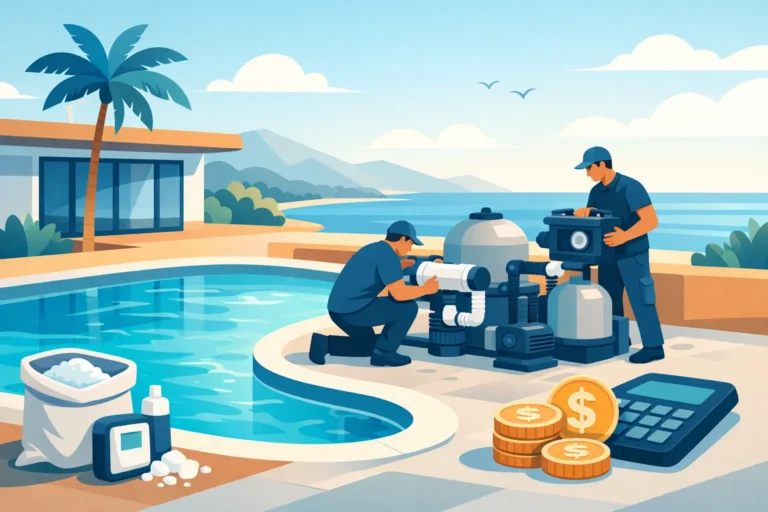
At its most practical level, automation can manage variable-speed pump schedules, filtration cycles, pool and spa valves, heaters, salt chlorine generators, and landscape or pool lighting. More complete systems can also control waterfalls, bubblers, deck jets, fire features, in-floor cleaning systems, and auxiliary pumps.
This matters because each feature affects another. Activating spa mode, for example, should redirect water through the spa, close the pool return, raise the heater set point, and prepare the spa jets without requiring several manual valve adjustments. A properly installed system handles those steps in the correct sequence.
The difference between convenience and control
A basic timer can run a circulation pump, but it cannot respond to the way a luxury backyard is used. Automation gives the homeowner control over programmed scenes. One setting might prepare the spa for an evening soak. Another can turn on the waterfall, adjust lighting, and activate selected features before guests arrive.
The benefit is not just fewer tasks. It is consistency. Equipment follows a defined schedule, reducing the chance that filtration is overlooked or that a heater runs longer than necessary. For families with busy schedules, that consistency protects both water quality and the equipment itself.
Why Automating Pool Equipment Supports Efficiency
Modern pool construction should consider the full operating cost of the backyard, not only the first day it looks complete. High-efficiency variable-speed pumps, properly sized plumbing, salt systems, and automation work together to reduce unnecessary energy use while maintaining dependable circulation.
A variable-speed pump is especially valuable because it can run at lower speeds for longer periods when appropriate, then increase output for a water feature, spa jets, cleaning cycle, or filtration demand. Automation allows those changes to happen on schedule rather than relying on a homeowner to change settings manually.
Heating is another area where programming makes a noticeable difference. Instead of heating the pool or spa indiscriminately, homeowners can set target temperatures and operating windows based on how the space is actually used. A spa can be ready in the evening without maintaining elevated temperatures all day. That is a more practical use of energy, especially during cooler Santa Clarita Valley and San Fernando Valley nights.
Automation also makes it easier to monitor salt chlorination and circulation schedules. It does not eliminate water testing, professional service, or routine cleaning. However, it gives the pool a more stable operating rhythm, which can make ongoing care more predictable.
Plan Automation During Pool Design, Not After
Retrofitting controls into an existing pool is possible, but the cleanest and most capable results come from planning automation during construction. When the pool, spa, equipment pad, electrical service, and outdoor living features are designed as one project, the contractor can account for every valve, relay, conduit run, and equipment requirement before concrete and hardscaping are complete.
That early coordination is particularly important for pools with integrated spas, Baja shelves, waterfalls, lighting zones, or multiple water features. Each feature may need dedicated plumbing, valves, electrical connections, and control capacity. Leaving those details until later can limit options or add avoidable labor.
At High Level Services, smart pool equipment is considered part of the complete design-build conversation, alongside structural engineering, #4 steel rebar, 4,500 psi shotcrete, finish selections, and surrounding hardscape. The goal is a backyard that looks elegant and functions reliably from the first season forward.
Equipment pad location still matters
A smart controller cannot correct poor equipment placement. The equipment pad should remain accessible for service, positioned with sound considerations in mind, and planned around the equipment needed for the final design. Pumps, filters, heaters, salt systems, and automation panels need adequate clearance and a durable installation environment.
Homeowners sometimes prefer to conceal pool equipment completely. Screening can improve the appearance of the yard, but it must not prevent maintenance access or restrict ventilation around equipment. A contractor should balance visual sophistication with the practical needs of long-term ownership.
Choosing the Right Automation Features
The best system is not necessarily the one with the most buttons. It is the one that controls the features your household will use, leaves reasonable room for future upgrades, and integrates with reliable, compatible equipment.
For a straightforward pool, a controller that manages filtration, heating, lighting, and sanitation may be sufficient. For a pool-and-spa combination with water features and an outdoor kitchen, homeowners often benefit from greater capacity. Multiple lighting zones, feature pumps, spa controls, and entertainment areas can quickly outgrow a basic setup.
Consider these questions before selecting a system:
- Will the pool include an integrated spa, and should it be ready at a specific time?
- Are waterfalls, bubblers, deck jets, or fire features part of the final design?
- Will outdoor lighting be controlled separately from pool lighting?
- Does the equipment need to support a future outdoor kitchen, cabana, or expanded entertainment area?
- Is strong Wi-Fi coverage available at the equipment pad and throughout the backyard?
The last question is easy to overlook. App-based control depends on a dependable connection. If the backyard has weak signal coverage, the automation system may still operate from its local panel and scheduled programs, but remote use can be inconsistent. Addressing network coverage during the project is often simpler than troubleshooting it after the landscape is finished.
Automation Does Not Replace Professional Pool Care
Smart controls are highly useful, but they are not a substitute for expert installation or responsible maintenance. Water chemistry still needs attention. Filters require cleaning. Equipment must be inspected, especially after heavy use, high winds, or seasonal temperature changes.
The quality of the installation also determines whether automated features work as intended. Incorrect valve orientation, undersized plumbing, poorly planned electrical work, or incompatible components can create frustrating operation regardless of how advanced the control panel appears. This is why homeowners should view automation as part of the pool’s overall construction standard, not as a last-minute accessory.
A reliable contractor will explain what the system controls, demonstrate how to use it, and provide a clear understanding of equipment operation before the project is complete. Homeowners should know how to adjust schedules, activate spa mode, check alerts, and identify when a service call is appropriate.
A Better Backyard Should Be Easier to Enjoy
The strongest pool designs reduce friction. They make the water more inviting, the lighting more dramatic, the spa more accessible, and the upkeep easier to manage. Automation supports that experience while helping protect the investment behind it.
When planning a new pool or a major backyard renovation, choose equipment controls with the same care given to shotcrete, tile, pavers, and finishes. The right system will not call attention to itself every day. It will simply help your backyard be ready when you are.